


 English
 한국어
한국어
 русский

Address:
No.233-3 Yangchenghu Road, Xixiashu Industrial Park, Xinbei District, Changzhou City, Jiangsu Province


Content
The drill point angle is the included angle formed by the two main cutting lips at the tip of a twist drill. When you hold a drill bit and look straight at its tip, the V‑shaped wedge you see is the point angle. It is not a cosmetic detail. That single geometric feature directly controls three things that make or break a drilling operation: how much downward force you need, how accurately the drill finds its center, and how the chips form and evacuate.
A sharper angle, like 90° or 118°, concentrates cutting force into a smaller contact area. The drill penetrates aggressively but demands more thrust and tends to skate before engaging. A flatter angle, such as 135° or 150°, spreads the load across a wider zone. Thrust drops, but the bit needs help with centering — usually a split point or a spot drill. These trade‑offs are not theoretical. They show up immediately in cycle time, hole quality, and tool cost.
Three parameters shift with every degree of point angle:
Choosing a drill point angle without understanding these three levers is guesswork. When you match the angle to the material and the operation, you shorten cycle time, reduce scrap, and extend tool life — often by double‑digit percentages.
Walk into any machine shop and you will find boxes of 118° and 135° drill bits. These two angles dominate the industry, and for good reason. The 118° point is the classic general‑purpose grind, while the 135° point has become the default for harder materials and automated setups. Knowing which one to grab changes the outcome.
The 118° point puts a sharper wedge into the cut. It works well on softer materials — aluminum, brass, mild steel, wood, and most plastics. The aggressive entry minimizes rubbing and heat generation on the cutting edges. But that same sharpness creates two problems: high thrust force and a tendency to wander at the start. You typically need a center punch or spot drill to keep it on location. Chips from a 118° point tend to be thicker at the outer edge and thinner near the center, which works fine in short‑chipped materials but can cause packing in long‑chipping ones.
The 135° point, often found with a split‑point grind, spreads the cutting action across a flatter cone. It enters the workpiece more gently, reduces thrust by as much as 30‑40%, and produces a more uniform chip thickness from center to edge. That uniformity matters when you are drilling deep holes or working with stainless steel, titanium, and alloy steels. The trade‑off is that the flatter point struggles to self‑center without a split point. Almost every quality 135° drill today comes ground with a split point to solve that exact problem.
The table below captures the functional differences that drive real shop decisions.
| Parameter | 118° Point | 135° Point (Split) |
|---|---|---|
| Cutting force / thrust | Higher thrust required | Lower thrust; more even load distribution |
| Centering ability | Moderate; often needs center punch or spot drill | Self‑centering when ground with split point |
| Chip formation | Thicker outer chips, thinner center | Uniform chip thickness; better evacuation |
| Hardness range (HRC) | Best under 30 HRC | Best 30‑45 HRC and above |
| Typical feed rate (relative) | Higher feed possible in soft materials | Moderate but consistent; less vibration |
If your shop runs short‑run aluminum parts, a 118° tool will serve you well. If you batch‑process 4140 pre‑hardened steel, switch to 135° and watch the tool life chart move in your favor.
Material hardness is the single biggest factor in point angle selection. But hardness alone is not enough — you also need to consider the chip type, the tensile strength, and whether the material work‑hardens. The table below maps common work materials to a recommended starting angle, assuming a standard HSS or solid carbide twist drill.
| Material Group | Typical Hardness | Recommended Point Angle |
|---|---|---|
| Aluminum, brass, copper | < 150 HB | 118° |
| Mild steel (1018, 1020) | < 30 HRC | 118° |
| Alloy steel (4140, 4340) | 30‑40 HRC | 130°‑135° |
| Tool steel, die steel | 40‑50 HRC | 135°‑140° |
| Stainless steel (304, 316) | 20‑30 HRC (work‑hardening) | 135° (split point mandatory) |
| Titanium alloys | 30‑38 HRC | 135° (split point; deep hole requires 140°) |
| Cast iron, ductile iron | 150‑300 HB | 118° or 135° depending on hardness |
| Plastics, composites | < 50 HRB | 60°‑90° (special grinds) |
For any material under 30 HRC, a 118° point remains the most cost‑effective choice. Between 30 and 45 HRC, move to 135° — the flatter angle reduces cutting edge chipping and manages heat better. Above 45 HRC, consider 140° or even 150° together with a solid carbide substrate, and reduce your feed slightly to keep the tool from fracturing.
In stainless steels, the decision is driven by work‑hardening behavior, not just initial hardness. A slow‑penetrating 135° split point cuts fresh material on every rotation, minimizing rubbing that would otherwise harden the surface. Solid carbide twist drills designed for stainless steel combine exactly this geometry with a polished flute for reliable production.
HSS and solid carbide drills do not respond to point angle in the same way. HSS is tough. It can absorb the higher impact and edge loading that comes with a sharp 118° point. Carbide is rigid and wear‑resistant, but brittle. A sharp point concentrates stress right where the cutting edge enters the cut, raising the risk of micro‑chipping in carbide tools.
For HSS drills, the 118° angle remains the standard for general use. High‑speed steel can flex slightly under load, and the sharp point helps it get through soft and medium‑hard materials without generating excessive heat. However, when drilling hardened or abrasive materials, even HSS benefits from shifting to a 135° split point — the reduced thrust and more gradual engagement lower the peak temperature at the cutting edge, extending tool life by a noticeable margin.
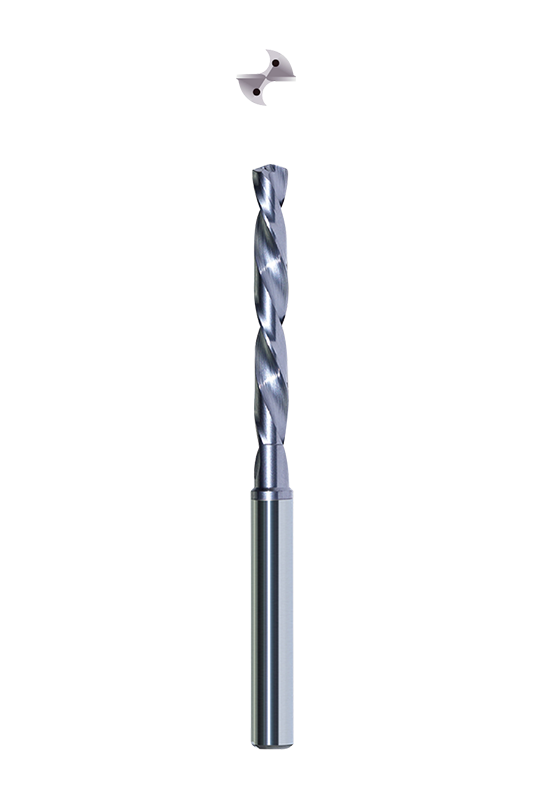
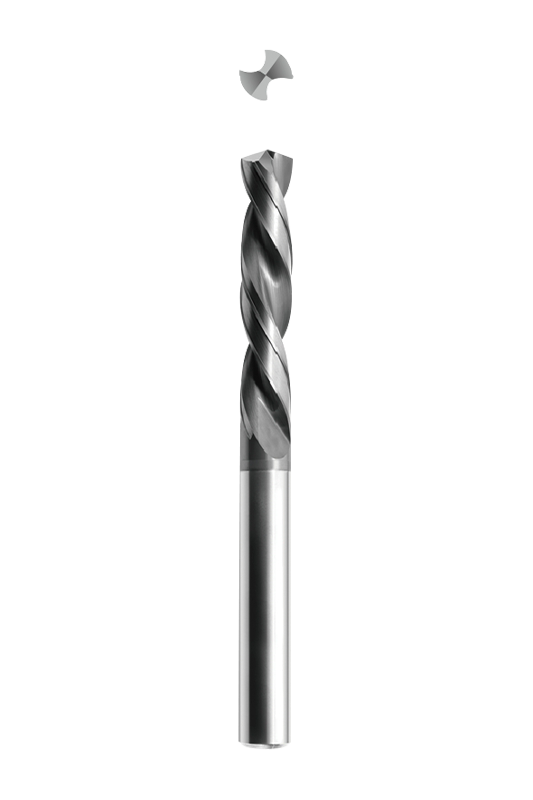
For solid carbide drills, 135° is the starting point for almost every application. The flatter angle distributes cutting forces more evenly across the edge, protecting the brittle substrate. Carbide drills also rely heavily on split‑point geometry to self‑center and to prevent the slight lateral deflection that could snap a rigid tool. When you need to push feed rates on pre‑hardened steels, solid carbide drills with 135° split points deliver hole tolerances and tool life that HSS cannot match. In deep‑hole operations, the combination of a 135° point and a parabolic flute lets you drill up to 15xD in a single pass without pecking.
Bottom line: if you are running HSS on a manual machine in mild steel, 118° works. If you have moved into CNC production with carbide tools, 135° is the floor, and you may need to go higher as hardness climbs.
Standard 118° and 135° angles cover roughly 80% of drilling jobs. But the remaining 20% — thin sheet metal, hardened tool steels, cast iron, or specialty hole‑making operations — demand angles outside that range. These non‑standard grinds solve problems that standard angles create.
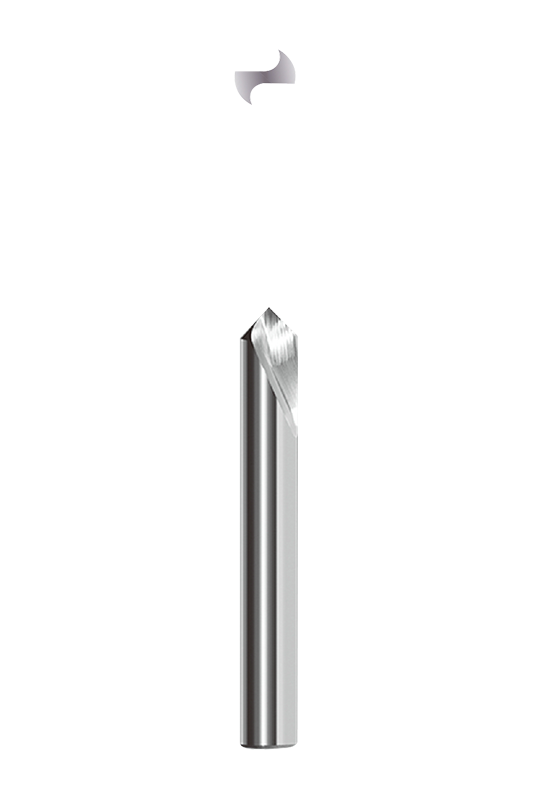
A 90° point angle is used primarily in two applications: center drills and chamfering. A center drill with a 90° tip creates a perfectly centered conical seat that matches the 60° or 90° included angle of a lathe center. In chamfering, a 90° drill or chamfer tool produces a clean 45° edge break in one pass. This angle is not meant for general drilling; it is a precision starting tool that ensures positional accuracy before the main drill enters. If you find your twist drills wandering at the start, a tungsten steel center drill with the correct included angle fixes the problem before it begins.
A 140° point angle sits between the common 135° and the more extreme 150°. It is the sweet spot for stainless steel grades that work‑harden aggressively, for high‑temperature alloys like Inconel, and for deep‑hole drilling in titanium. The extra five degrees over a 135° point spread the cutting load even further, reduce heat concentration, and minimize the built‑up edge that plagues stainless steel drilling. Many aerospace shops default to 140° for superalloy work.
A 150° point angle is reserved for hard materials above 45 HRC — hardened tool steels, chilled cast iron, and some case‑hardened parts. The extremely flat point enters the material with minimal thrust and avoids the sudden edge impact that would chip a sharper angle. The chip cross‑section becomes very thin and wide, which helps with heat dissipation but can make chip breaking a challenge. For through‑holes in hard steel, 150° often outperforms 135° by a factor of two in tool life.
The point angle tells only half the story. The point configuration — standard or split — determines how the chisel edge behaves and whether the drill centers itself. Standard points have a single chisel edge across the web. That edge does not cut; it extrudes material sideways, which demands high thrust and causes the drill to wobble. Split points grind additional facets into the chisel, turning it into a true cutting edge that shears material from the very first rotation.
The table below quantifies what a split point buys you.
| Feature | Standard Point | Split Point |
|---|---|---|
| Centering accuracy | Poor without spot drill or center punch | Self‑centering; cuts from first contact |
| Thrust force required | High — chisel edge extrudes material | Low — chisel edge cuts actively |
| Walk / skate behavior | Noticeable, especially on smooth surfaces | Almost eliminated |
| Best application | Manual drilling with a center‑punched hole | CNC, thin sheet, deep holes, hard materials |
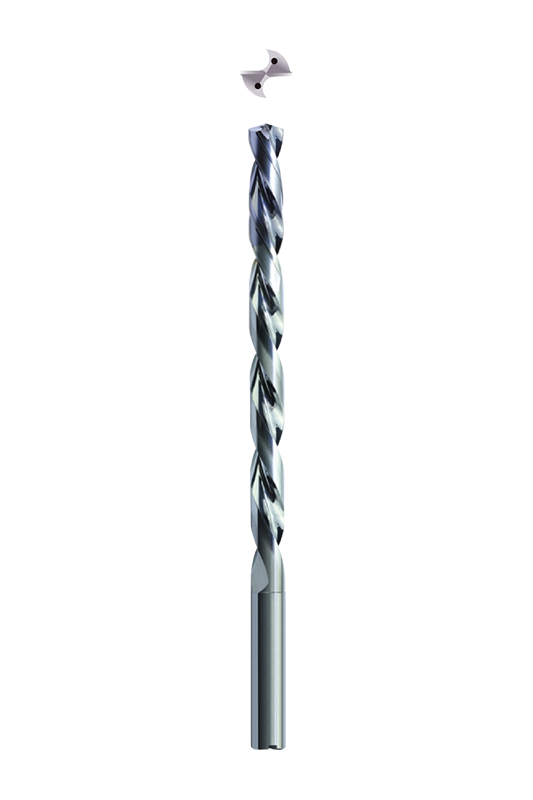
A split point is not optional in certain conditions. If you are drilling thin sheet metal — under 1 mm — a standard point will skate and tear. If you are running a CNC without a spot drilling cycle, a standard point will scatter your hole positions. If you are drilling stainless or alloy steel above 35 HRC, a standard point will burn up fast. In all of these cases, you need a split point. For deep‑hole applications, pairing a split point with a parabolic flute reduces peck cycles and improves chip evacuation dramatically. Solid carbide deep‑hole drills often combine a 135°‑140° split point with a parabolic flute to handle depths beyond 8xD in a single plunge.
Tool life is not just a function of coating or coolant — the point angle has a direct, measurable impact. In controlled testing on 45 HRC tool steel, a 135° solid carbide drill with split point outlasted a 118° carbide drill by approximately 40% under identical speed, feed, and coolant conditions. The reason is not mysterious. The 135° point reduces the peak temperature at the cutting edge corner, where most wear initiates, and spreads the mechanical load across a longer cutting lip.
A sharper 118° angle forces the cutting edge to enter the material almost perpendicularly to the feed direction, concentrating stress on a small area. As hardness climbs, that edge micro‑chips, accelerates flank wear, and eventually catastrophically fails. The 135° angle presents a shallower cutting edge to the workpiece, which reduces the instantaneous chip thickness and flattens the temperature profile.
In materials that produce abrasive powders — cast iron, some composites — the drill’s corner experiences steady erosion. A 135° or 140° point distributes the wear over a longer edge length, keeping the drill in tolerance longer. In high‑production shops, shifting from 118° to 135° on a 50 HRC forging can reduce tool changes per shift from four to two, doubling spindle uptime.
The data makes one point clear: if you are drilling anything above 30 HRC and want consistent tool life, 135° is your baseline. For every 5 HRC increase above 40, add another 5° to the point angle — 140° at 45 HRC, 150° at 50 HRC — and match it with a solid carbide substrate and a quality split‑point grind.
When you need to make a fast decision on the shop floor, follow this simplified logic. Start with your workpiece material, check the hardness, then consider the hole depth and your drill material. The path will lead you straight to the recommended point angle.
This sequence covers the vast majority of drilling tasks in a typical job shop or production environment. When in doubt, test a 135° split point first on any material above 30 HRC. The penalty for choosing wrong is a ruined part or a broken tool; the reward for choosing right is a quiet spindle, accurate holes, and predictable tool costs.

We are End Mills Manufacturer and End Mill Bits Factory. Our Footprints Are Around The World, We provide quality products and services to customers from all over the world.


No.233-3 Yangchenghu Road, Xixiashu Industrial Park, Xinbei District, Changzhou City, Jiangsu Province


+86-18068566610


sales@magotan-tools.com
+86-18068566610
