


 English
 한국어
한국어
 русский

Address:
No.233-3 Yangchenghu Road, Xixiashu Industrial Park, Xinbei District, Changzhou City, Jiangsu Province


Content
A square end mill that runs at the wrong speed in a single setup can scrap a $2,000 workpiece before lunch. The choice isn’t just about diameter—it’s a precise intersection of material, coating, and chip evacuation. Every variable matters. This guide strips away marketing fluff and gives you the data points that floor supervisors and process engineers actually use to make tooling decisions.
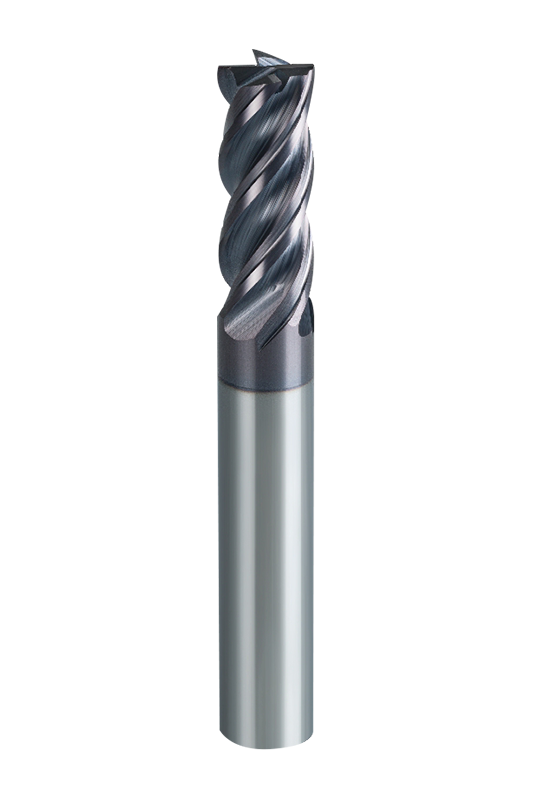
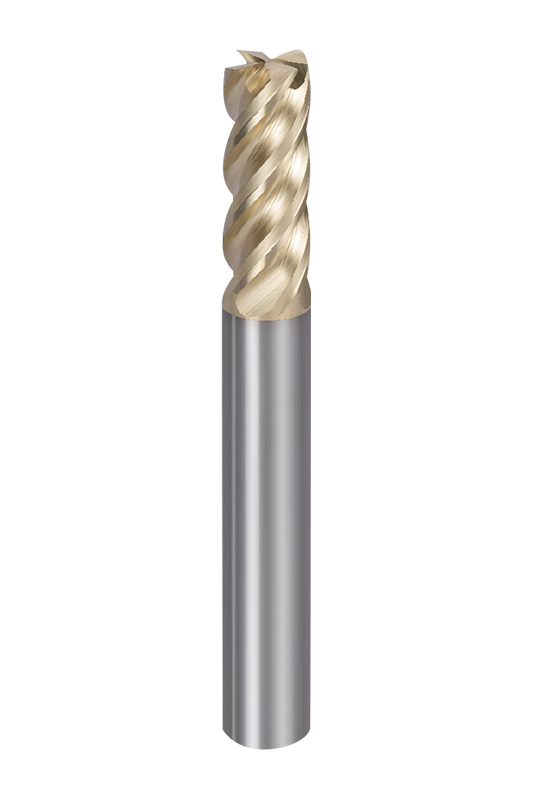
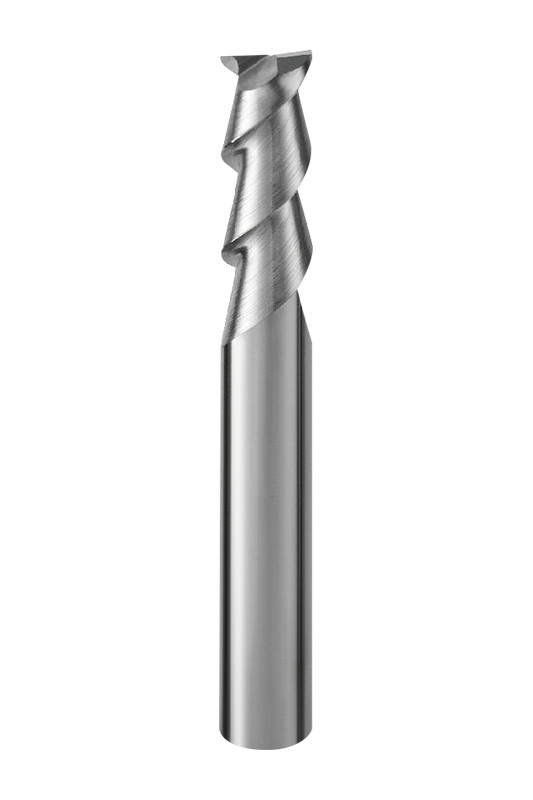
A square end mill is a rotary cutting tool with a flat end that produces a 90-degree shoulder at the bottom of a cut. Unlike ball nose or corner radius tools, it leaves a sharp internal corner. That geometry makes it the first choice for slotting, pocketing, shoulder milling, and any feature that demands a perfectly square floor. The cutting edges extend across the bottom face—often right through the center—enabling plunge cutting and ramping.
Square end mills can have 2 to 8 flutes, though 2, 3, 4, and 6 are most common in production shops. They are manufactured from high-speed steel (HSS), powdered metal, or solid carbide. Today, carbide dominates high-precision environments because it holds an edge at temperatures that would instantly soften HSS.
| Feature | Square End Mill | Corner Radius End Mill | Ball Nose End Mill |
|---|---|---|---|
| Corner geometry | Sharp 90° | Radiused corner | Full radius |
| Floor finish | Flat, no fillet | Flat with fillet | Scalloped |
| Stress concentration | High at corner | Reduced | Distributed |
| Typical use | Pocketing, slotting | Shoulder roughing | 3D contouring |
Telling a machinist to use HSS for a 50 HRC mold steel is like asking a family sedan to win a drag race. The material difference is enormous. Solid carbide (tungsten carbide with cobalt binder) delivers hardness around HRA 92, while typical HSS sits near HRA 80. That gap translates to a 3- to 5-fold increase in tool life when cutting abrasive or hardened materials.
Carbide tools also excel at higher surface speeds. Where HSS might top out at 30 m/min in alloy steel, carbide can comfortably run at 120 m/min or more with the right coating. The trade-off is cost: a quality carbide square end mill costs 2 to 4 times more than an HSS equivalent. But in a CNC environment where machine time is the real expense, carbide almost always wins on cost per part.
| Property | Solid Carbide | High-Speed Steel |
|---|---|---|
| Hardness (HRA) | 91–93 | 78–83 |
| Max working temperature | 800–1000 °C | 550–600 °C |
| Wear resistance | Excellent | Moderate |
| Suitable workpiece hardness | Up to HRC 65 | Up to HRC 35 |
| Price (relative) | 3x–5x | 1x |
For aluminum and non-ferrous materials, HSS can still work in low-volume shops. But when you need repeatable tolerances under 0.01 mm or face interrupted cuts in stainless steel, solid carbide is the default.
Flute count controls chip evacuation, core strength, and feed rate. A 2-flute square end mill provides maximum chip space—ideal for aluminum where a large chip volume must escape quickly. At the opposite end, a 6-flute tool leaves less room but offers higher rigidity and more cutting edges, which suits hardened steel above HRC 50 where light radial engagement is the norm.
Helix angle influences cutting force direction and chip flow. A 30-degree helix produces stronger cutting edges and less tool deflection, making it a solid pick for tough steels. A 45-degree or variable helix spreads cutting forces over time, reducing harmonic vibration. Many modern carbide end mills combine variable helix with variable indexing to suppress chatter without sacrificing material removal rates.
| Material | Flute Count | Helix Angle | Key Benefit |
|---|---|---|---|
| Aluminum | 2 or 3 | 40°–45° | High evacuation, polished flutes |
| Stainless steel | 4 | 35°–38° | Balanced rigidity and chip flow |
| Titanium | 4 or 5 | 38°–42° | Reduced cutting force, heat control |
| Hardened steel (HRC 50+) | 6 | 30° | Edge strength, low radial engagement |
A coating without the right substrate is window dressing. TiAlN (titanium aluminum nitride) creates an aluminum oxide layer at high temperature, making it the workhorse for general steel and stainless steel up to HRC 45. AlTiCrN pushes hardness further and resists oxidation at temperatures exceeding 1100 °C—this is the go-to for titanium and nickel alloys. DLC (diamond-like carbon) provides an ultra-low friction coefficient, perfect for aluminum and copper where built-up edge is the enemy.
For stainless steel machining, the right coating combined with a dedicated tool geometry can double tool life. Our end mills for stainless steel machining use an optimized AlTiCrN layer that has shown 40% less flank wear in 304 stainless at 150 m/min compared to standard TiAlN.
Every milling operation places different demands on the tool. Face milling with a square end mill demands a high axial depth of cut and often a 45-degree lead angle to thin the chip. For slotting, the full tool diameter engages the cut, so radial chip thinning and adequate coolant become critical. Plunge milling—sometimes called Z-axis milling—is possible only with a center-cutting square end mill that has cutting edges extending to the center of the bottom face.
When machining deep pockets, a necked-down shank with appropriate reach prevents wall collision. And in profile finishing, a square end mill with flat cutting edges leaves a near-perfect 90-degree wall, eliminating the secondary deburring often needed after ball nose passes.
The numbers below are not generic—they come from hundreds of tool life tests on production-grade CNC machines. Start here and adjust based on your rigidity, coolant, and tool holder runout. A runout above 0.01 mm can cut tool life in half, especially with micro-diameter tools.
| Material | Hardness | Cutting Speed (m/min) | Feed per Tooth (mm) |
|---|---|---|---|
| Aluminum 6061 | 95 HB | 250–500 | 0.10–0.20 |
| Stainless 304 | 200 HB | 120–180 | 0.05–0.10 |
| Titanium Ti-6Al-4V | 350 HB | 50–80 | 0.03–0.06 |
| Tool steel (H13, HRC 48) | 48 HRC | 80–120 | 0.04–0.08 |
| Hardened steel (D2, HRC 58) | 58 HRC | 40–70 | 0.02–0.04 |
For micro-diameter square end mills (0.5 mm–2 mm) in aluminum, spindle speeds often reach 20,000–40,000 RPM with a feed per tooth of 0.01–0.03 mm. The axial depth should stay between 0.1 mm and 0.3 times the tool diameter. In titanium, those numbers drop dramatically—a 2 mm tool might run at 15,000 RPM with a feed of 0.005 mm per tooth and a 0.05 mm depth of cut. For dedicated solid carbide end mills for titanium alloy machining, tool geometry tuned to high-temperature alloys prevents work hardening and notch wear.
Selection moves from the workpiece outward. First, identify the material group and its hardness. That defines the substrate—carbide is almost always the answer for anything above 35 HRC. Next, decide the operation type: roughing, finishing, or both. Roughing calls for a coarser pitch and a tougher coating; finishing demands more flutes and a sharper edge. Third, calculate the required reach and shank diameter. Long-reach applications often need a neck relief or a reduced shank.
If sharp internal corners are needed, a square end mill is mandatory—corner radius tools cannot produce a true 90-degree angle. When the corner edge is prone to chipping, move to a very small corner radius or a chamfered edge as a compromise. The table below maps common jobs to starting tool configurations.
| Operation | Material | Flutes | Coating | Helix |
|---|---|---|---|---|
| Slotting | Aluminum | 2 | DLC or uncoated polished | 45° |
| Shoulder roughing | Stainless 304 | 4 | AlTiCrN | 38° |
| Finishing floor | Titanium | 5 | AlTiCrN | 40° |
| Hard milling | HRC 58 steel | 6 | TiAlN or AlTiCrN | 30° |
Finally, demand a material certificate and coating thickness report from your supplier. Batch-to-batch variation in carbide grain size can shift performance by 20% or more. A carbide end mills for aluminum machining series with polished flutes and tight diameter tolerances, for instance, removes the guesswork when high-gloss finishes matter.
Even experienced operators sabotage square end mills with avoidable mistakes. The following errors show up in tool life reports across job shops and OEM lines.
Before adding a square end mill to your tool crib, verify these six points. They separate a commodity cutter from a precision tool that holds size across thousands of parts.
Square end mills are a precision investment, not a commodity. When you treat them as an engineered system—matching geometry, substrate, coating, and application—you stop chasing tool life and start predicting it.

We are End Mills Manufacturer and End Mill Bits Factory. Our Footprints Are Around The World, We provide quality products and services to customers from all over the world.


No.233-3 Yangchenghu Road, Xixiashu Industrial Park, Xinbei District, Changzhou City, Jiangsu Province


+86-18068566610


sales@magotan-tools.com
+86-18068566610
