


 English
 한국어
한국어
 русский

Address:
No.233-3 Yangchenghu Road, Xixiashu Industrial Park, Xinbei District, Changzhou City, Jiangsu Province


Content
Every scrapped deep hole starts the same way: a long drill wanders off center, a chisel edge skids across a hard surface, or a tap breaks in the first few threads. All three failures share one preventable cause — the absence of a pilot hole. A pilot hole is a short, smaller-diameter hole drilled before the main operation. It guides the subsequent drill or tap, removes material where the main tool's chisel edge would otherwise struggle, and keeps cutting forces balanced during entry. In production terms, it is the difference between a hole that lands exactly where the drawing says and a hole that ends up out of position and scraps the part.
The logic behind it is simple. A drill cuts on its outer cutting edges, but its center — the chisel edge — does not cut cleanly; it pushes material aside. The larger the drill diameter, the longer the chisel edge, and the more thrust force the spindle must apply. That thrust is what produces wandering, oval holes and, in the worst case, drill breakage. A pilot hole removes most of the chisel edge's workload and gives the main drill a pre-cut path to follow.
Not every hole needs a pilot. But in shop-floor practice, these five situations almost always call for one:
When the final hole exceeds about 12 mm, the chisel edge of a standard twist drill becomes the dominant source of misalignment. Drilling a pilot hole of roughly 25–40 percent of the final diameter reduces thrust force dramatically and gives the large drill a stable entry point.
Stainless steel, titanium, and hardened tool steel all resist the chisel edge's pushing action, so the drill skids instead of cutting. A pilot hole gives the main drill a defined start on a symmetrical surface. Both cutting edges then engage at the same moment, which stops the drill from pulling sideways and producing oversized holes.
When hole location tolerance is tighter than about ±0.1 mm, do not trust the main drill to find its own start point. A spot drill or center drill creates the pilot and simultaneously establishes a chamfer that aligns the following tool. This practice is standard in mold and aerospace work because it separates location accuracy from the main drill's entry behavior.
For holes deeper than four to five times the diameter, a pilot helps keep the long drill straight. A deep-hole drill entering a flat surface has no reference until the chisel edge fully seats; a pilot supports the drill tip immediately and reduces the tendency to recut and wander in the first few millimeters.
A tap is not a drill; it needs a pre-drilled hole to work at all. In difficult materials, a short pilot that is concentric to the tap drill matters just as much as the tap drill size itself. Non-concentric entry is one of the most common reasons taps break within the first two revolutions.
The purpose of a pilot is guidance, not material removal. Too large a pilot leaves too little material for the main drill to engage, which can cause chatter; too small a pilot does not solve the chisel edge problem. A practical starting range for metalworking is 25–40 percent of the final hole diameter, with the lower end reserved for hard materials.
| Material group | Pilot diameter (% of final hole) | Example for a 10 mm final hole |
|---|---|---|
| Aluminum alloys | 40–50% | 4.0–5.0 mm |
| Mild steel and cast iron | 30–40% | 3.0–4.0 mm |
| Stainless steel | 25–35% | 2.5–3.5 mm |
| Titanium alloys and hardened steel | 20–30% | 2.0–3.0 mm |
Pilot depth does not need to be generous. A pilot of 1.5 to 2 times its own diameter is normally enough to stabilize the main drill; anything longer adds cycle time with little benefit. For screw pilot holes, the sizing logic changes. The pilot diameter should approach the screw's root diameter so the threads bite fully while the screw body does not create splitting stress in the workpiece. In metal, a practical shortcut is 70–80 percent of the screw's outer thread diameter for thread-forming screws, and a slightly smaller pilot for thread-cutting screws. Always verify with a test hole when the joint carries load, and remember that finding the center of a circle before drilling is the first step to a pilot that lands on target.
A center drill — often called a combined drill and countersink — is the classic pilot tool for lathe and manual work. Its short, rigid geometry resists deflection and leaves a countersunk seat that guides the following drill. On CNC machines, concentricity is the deciding factor: if the pilot runs off center, the main drill inherits that error. Our tungsten steel center drills are ground on CNC tool grinders so the pilot stays true to the rotation axis.
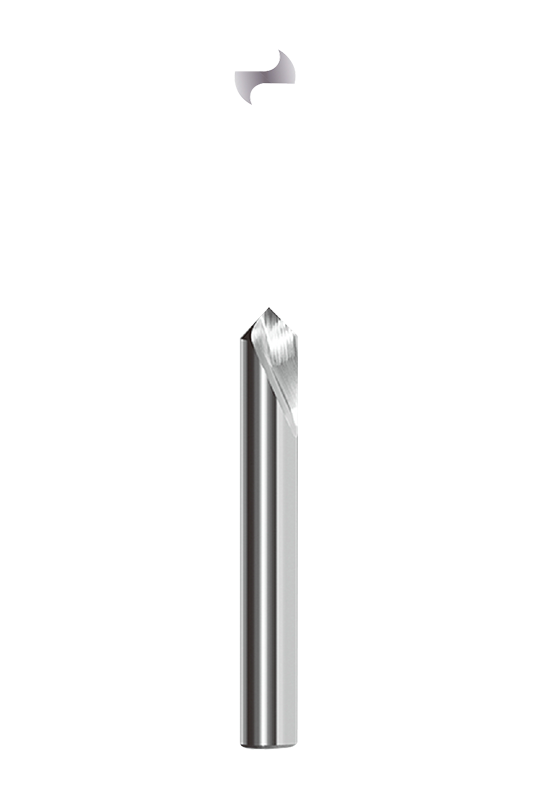 Tungsten Steel Center Drills Manufacturers, Tungsten Steel Center Drills CompanyAs China Tungsten Steel Center Drills Manufacturers and Tungsten Steel Center Drills Company, Maton Supply Wholesale Tungsten Steel Cente...View Product →
A spot drill is shorter than a standard drill and usually ground with a 90° or 120° point. It creates a shallow pilot dimple rather than a full pilot hole, which makes it the most common CNC choice for hole location. Because it is short and rigid, a spot drill produces a precise start point without leaving a deep countersink that could weaken thin sections. For high-volume cast iron and aluminum runs, carbide spot drills for cast iron and aluminum alloy machining hold a consistent start dimple over long production shifts.
Carbide Spot Drill for Cast Iron and Aluminum Alloy Machining Suppliers, FactoryMaton Tools is China Carbide Spot Drill for Cast Iron and Aluminum Alloy Machining Suppliers and Factory, Custom Carbide Spot Drill for C...View Product →
When the pilot itself must hold tight tolerances, solid carbide twist drills outperform HSS tools in production. Carbide stiffness translates into straighter starts and longer tool life at higher feeds. Even at pilot size, point geometry matters: drill point angle selection changes how the tool engages a curved or flat surface and directly affects start accuracy.
The best pilot geometry in the catalog will not save you if the process fights it. These habits keep pilot and main drill working together:
Modern tooling sometimes removes the pilot requirement entirely. Carbide drills with self-centering point geometries and aggressive web thinning can start directly on a flat surface at moderate depths without noticeable wander. The trade-off is tool cost and process rigidity; on a stable CNC machine with a rigid fixture, this works reliably for holes up to about 10 mm. Below that diameter, the chisel edge problem is small enough that a direct start is usually acceptable.
Thread milling changes the calculation in a different way. A conventional thread mill enters an existing pilot or tap drill, but multifunction cutters can drill, chamfer, and thread in a single pass, which eliminates both the pilot hole and one setup step. For steel parts where thread quality and cycle time both matter, a multifunction thread milling cutter without a pilot hole is worth a serious evaluation, and the range of thread milling cutter options available today covers most thread standards and hardness levels.
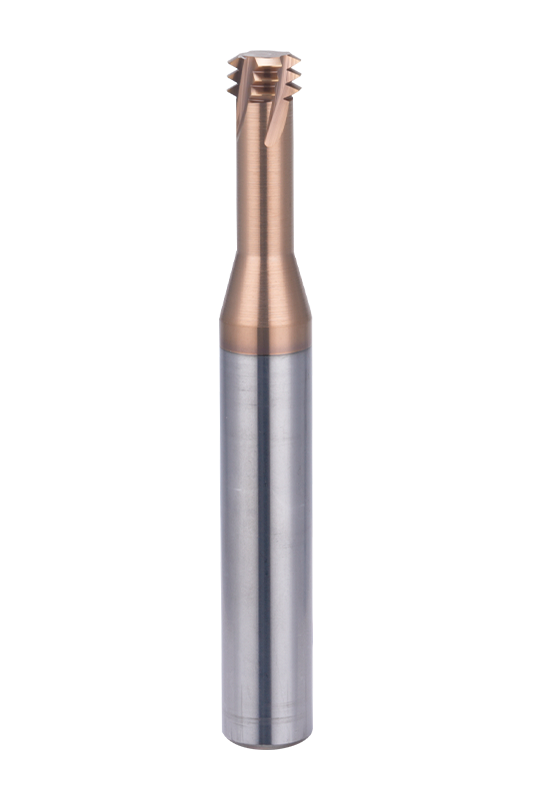 Multi-Function Thread Milling Cutter Without Pilot Hole For Steel Machining SuppMaton Tools is China Multi-Function Thread Milling Cutter Without Pilot Hole For Steel Machining Suppliers and Factory, Custom Multi-Func...View Product →
Whichever route you choose, treat the pilot hole as a process decision rather than a habit. It costs a few seconds of cycle time, and in return it protects hole accuracy, tool life, and the predictability of the entire machining operation.

We are End Mills Manufacturer and End Mill Bits Factory. Our Footprints Are Around The World, We provide quality products and services to customers from all over the world.


No.233-3 Yangchenghu Road, Xixiashu Industrial Park, Xinbei District, Changzhou City, Jiangsu Province


+86-18068566610


sales@magotan-tools.com
+86-18068566610
