


 English
 한국어
 русский

Address:
No.233-3 Yangchenghu Road, Xixiashu Industrial Park, Xinbei District, Changzhou City, Jiangsu Province


Content
When a drawing calls for a 1/2-13 UNC tapped hole, the first question is often simple: what drill goes in the spindle? If you searched for a drill bit for 1 2 13 tap, you are almost certainly dealing with a 1/2-13 UNC thread. The standard answer is 27/64 inch, about 10.7 mm. It is the size most tap drill charts list, and for good reason: it gives a practical thread percentage for general steel, aluminum, and stainless work. The number alone is not the whole story, though.
A 1/2-13 thread has a major diameter of 0.500 inch and 13 threads per inch. The tap drill decides how much material the tap must cut. Go too small and the tap works hard, especially in stainless. Go too large and the thread may look fine but lose strength. This guide explains the 27/64 choice, the 75 percent alternative, clearance holes, and the drilling habits that keep taps out of trouble.
For a standard 1/2-13 UNC tap, use a 27/64 inch drill bit. In decimal form that is 0.4219 inch, or about 10.7 mm. The resulting thread is roughly 78 percent, close to the usual 75 percent target and suitable for most general-purpose tapping.
Some drawings call out a true 75 percent thread. In that case the calculated drill size is about 0.4251 inch, or 10.80 mm. Not every shop keeps that size on the shelf; 27/64 remains the practical standard.
| Hole or feature | Inch size | Decimal (in) | Metric (mm) | Typical use |
|---|---|---|---|---|
| 1/2-13 tap drill | 27/64 | 0.4219 | 10.72 | General tapping, about 78% thread |
| 75% thread alternative | 0.4251 | 0.4251 | 10.80 | When thread percentage is specified |
| Close clearance | 17/32 | 0.5313 | 13.49 | Alignment-critical bolted joints |
| Free clearance | 9/16 | 0.5625 | 14.29 | General bolted connections |
| Loose clearance | 5/8 | 0.6250 | 15.88 | Easy assembly, oversize conditions |
The old shop formula for inch threads is major diameter minus one divided by the thread pitch. For 1/2-13, that is 0.500 minus 1/13, or about 0.4231 inch. The nearest common drill is 27/64 at 0.4219 inch. That small difference is why the thread percentage lands near 78 percent instead of exactly 75.
Thread percentage is a balance, not a score. More thread means more load-bearing area, but also more torque on the tap, more heat, and a greater chance of breakage. In aluminum, a slightly larger drill can reduce built-up edge. In stainless or tough alloys, a drill that is too small can cause work hardening and chip packing. Start with 27/64, then adjust for the material, tap class, and hole depth.
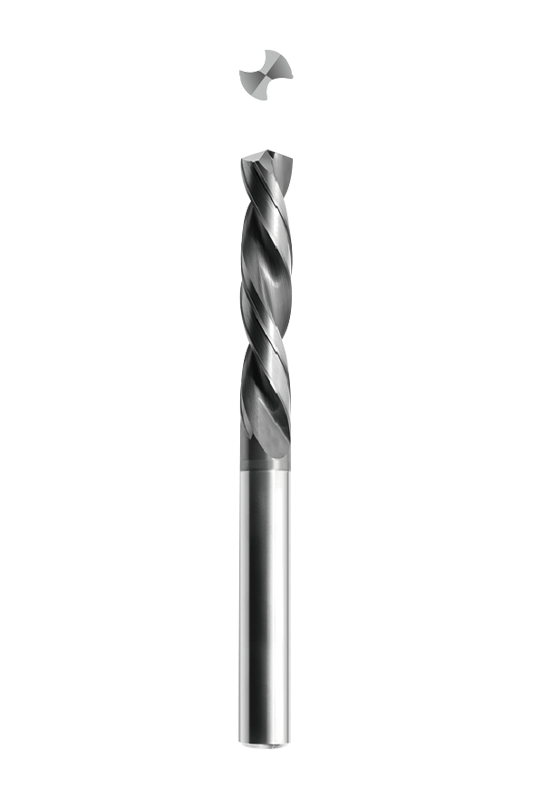 General Purpose Solid Carbide Twist Drill BitsThe NNZT series covers external- and internal-cooling 3D/5D/8D drills for steel, stainless, cast iron, and similar materials, with diameter-based speed and feed tables.View Product →
For general-purpose holemaking, matching the drill geometry to the material matters as much as the nominal size. A drill that cuts cleanly and holds size will do more for thread quality than a small change in decimal diameter.
A 27/64 inch hole can be made with high-speed steel or solid carbide. HSS is forgiving for hand work and repair jobs. Solid carbide is stiffer, holds size well in CNC production, and tolerates higher speed, but it is less forgiving of runout and interrupted cuts. Use a drill with a point angle and coating matched to the workpiece, and keep the flutes sharp.
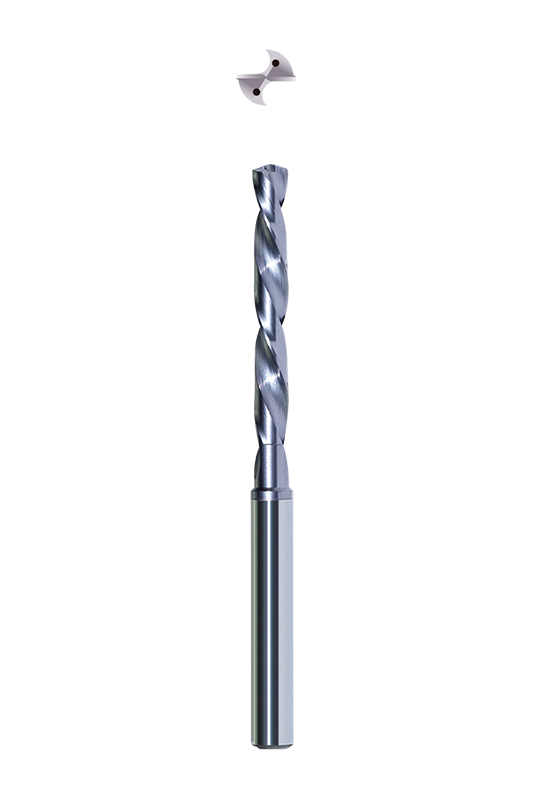 Twist Drills for Mild Steel and Stainless SteelNNZB internal-cooling drills in 3D and 5D versions target mild steel, carbon/alloy steel, and stainless, with straight or bevel shank and cutting data for 3–20 mm.View Product →
For mild steel and stainless, choose a geometry that controls chip flow and heat. Peck drilling and good lubrication often matter more than a premium coating if the setup is flexible.
Most general steel drilling uses a 118 degree point. A 135 degree split point is common for harder or tougher materials because it needs less thrust and centers better. Spot with a center drill or spot drill slightly larger than the drill point, not the full drill diameter. That keeps the 27/64 drill from walking without cutting an unnecessary deep chamfer.
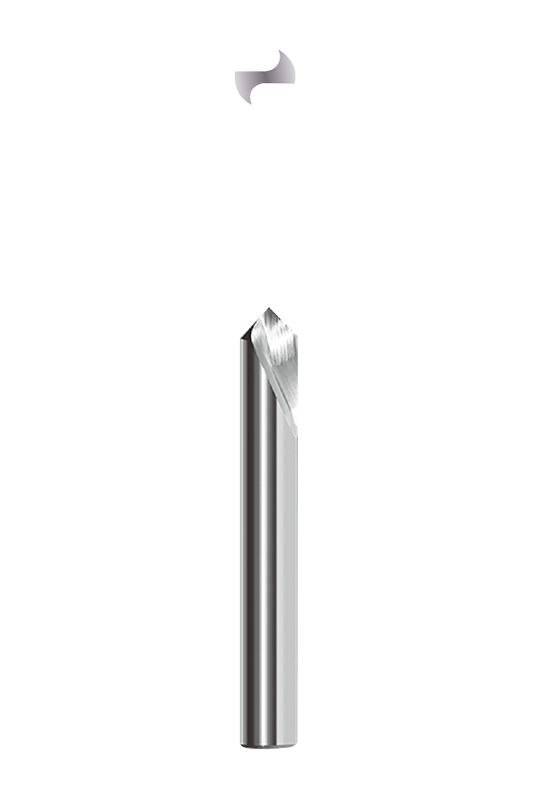 Carbide Tungsten Steel Center DrillsCarbide center drills create positioning holes that keep the main drill from walking, improving alignment and hole quality before drilling, turning, or milling.View Product →
Use the shortest drill that reaches the feature. A long drill amplifies runout, especially at 27/64 inch in a hand drill or a small mill. If the hole is deep, clear chips often and use a peck cycle.
If you need help choosing between spiral point and spiral flute taps, our tapping and threading guide goes deeper into thread geometry and tap styles.
For a bolt that passes through a plate, do not use 27/64. Use a clearance drill. A 17/32 inch hole gives a close fit, 9/16 is a practical free fit, and 5/8 is loose. Choose based on alignment, coating, and assembly speed.
For thread depth, a common starting point is 1.5 times the nominal diameter in steel, so about 3/4 inch of full thread for 1/2-13. Softer materials may need more. In aluminum, if galling or tearing appears, a slightly larger drill or a forming tap may help, but confirm the thread specification first. In stainless, keep the drill sharp, use coolant, and avoid dwelling in the cut.
Use 27/64 inch, or about 10.7 mm. It is the standard tap drill for a 1/2-13 UNC thread and produces roughly 78 percent thread.
It is larger than the standard tap drill. A 7/16 inch hole is 0.4375 inch and produces roughly 62 percent thread. It can ease tapping in some materials, but the thread is weaker and may not meet the drawing. Use it only if the design allows.
27/64 inch is about 10.7 mm. A true 75 percent thread is about 10.80 mm. A 10.5 mm drill is smaller and will increase tapping torque.
No. A 1/2 inch drill is the nominal bolt size, not the tap drill. It will not leave enough material for a proper 1/2-13 thread.
No. 1/2-20 UNF uses 29/64 inch, about 11.5 mm. Always check the thread callout before drilling.
A 1/2 NPT pipe tap is a different thread and uses a different drill, often 23/32 inch. Do not apply the 27/64 size to pipe threads.
The 1/2-13 tap drill answer is 27/64 inch, about 10.7 mm. Keep the hole straight, use sharp tooling, and let the material guide the final thread percentage. If you are setting up a production job and want to match a drill to your material, send the details through our contact page. We can help you choose a solid carbide drill and tapping approach that fits the machine and the part.

We are End Mills Manufacturer and End Mill Bits Factory. Our Footprints Are Around The World, We provide quality products and services to customers from all over the world.


No.233-3 Yangchenghu Road, Xixiashu Industrial Park, Xinbei District, Changzhou City, Jiangsu Province


+86-18068566610


sales@magotan-tools.com
+86-18068566610
