


 English
 한국어
한국어
 русский

Address:
No.233-3 Yangchenghu Road, Xixiashu Industrial Park, Xinbei District, Changzhou City, Jiangsu Province


Content
A tooling engineer compares two TiAlN-coated carbide end mills with the same diameter, flute count, and nearly identical price. One consistently machines noticeably more parts before the edge wears out. The visible layer looks the same, but the deposition process behind it is not. CVD and PVD coating are the two dominant ways to apply a hard ceramic film to a cutting tool, and they produce measurably different results. For solid carbide end mills, drills, and reamers, PVD is the right choice because it preserves the ground edge and keeps the carbide substrate fully hardened. For indexable inserts that operate at high cutting speeds, CVD's thicker diffusion-bonded layer is often the better fit. The sections below explain why.
Both processes deposit a thin ceramic film—most often titanium nitride (TiN), titanium aluminum nitride (TiAlN), or aluminum titanium nitride (AlTiN)—onto the tool surface. The film raises surface hardness well above 2,000 HV, lowers the coefficient of friction at the chip-tool interface, and slows diffusion wear at elevated cutting temperatures. A properly applied coating often multiplies tool life by two to three times compared with an uncoated carbide tool. The deposition method determines how that film bonds, how thick it can grow, and what thermal load the substrate must survive during coating. These three factors are what separate CVD and PVD coating in practice.
Physical vapor deposition is a line-of-sight vacuum process. The coating source is a solid target, typically a titanium or titanium-aluminum alloy, which is vaporized inside a vacuum chamber using arc evaporation or sputtering. The metal vapor reacts with an atmosphere containing nitrogen and condenses onto the tool surface as a hard nitride layer. The tools rotate during deposition so the coating reaches both the flank and rake faces, although deep internal cavities or narrow slots may receive less coverage than open surfaces.
The key advantage for cutting tools is process temperature. PVD coating typically runs at roughly 200-500°C, well below the sintering temperature of tungsten carbide, so the base material keeps its original hardness. The edge geometry remains exactly as ground, without softening or thermal distortion.
Chemical vapor deposition starts with gases or vaporized liquids instead of a solid target. The tool is heated inside a reactor while precursor gases—such as titanium tetrachloride, nitrogen, and hydrogen—flow over the surface. A chemical reaction takes place on the hot substrate, producing a dense, well-bonded film. Common CVD variants include atmospheric pressure CVD (APCVD), low-pressure CVD (LPCVD), and plasma-enhanced CVD (PECVD).
The defining difference is temperature. CVD requires roughly 800-1050°C to drive the reaction, significantly hotter than PVD. The heat enables thicker coatings and creates a metallurgical diffusion bond between the film and the carbide, giving excellent adhesion. The trade-off is that the substrate softens slightly and the cutting edge develops a small radius as the coating covers it. A rounded edge is acceptable on inserts but problematic for end mills that depend on a precisely sharp edge.
The table below summarizes how the two processes compare on the criteria that matter for machining.
| Criterion | PVD Coating | CVD Coating |
|---|---|---|
| Source material | Solid target vaporized in vacuum | Reactive gases or vaporized liquids |
| Process temperature | Approximately 200-500°C | Approximately 800-1050°C |
| Typical thickness | 1-5 microns | 5-15 microns |
| Coating-substrate bond | Physical adhesion | Metallurgical diffusion |
| Effect on sharp edges | Preserves ground edge | Rounds the edge slightly |
| Common coatings | TiN, TiAlN, AlTiN, DLC | TiN, TiCN, Al2O3 |
| Best suited for | End mills, drills, reamers, taps | Indexable inserts, wear parts |
These differences are not theoretical. They translate directly into cutting performance, tool life, and the type of operation each coating suits.
Choosing between CVD and PVD coating changes three things on the shop floor: edge sharpness, heat resistance, and coating adhesion.
A PVD film is usually 1-5 microns thick and closely follows the original profile, so a ground edge radius of 5 microns stays essentially sharp. Finishing cuts and small-diameter tools benefit directly from that sharpness because cutting forces stay low and surface finish remains consistent. CVD layers grow thicker, often 5-15 microns, and add a measurable radius to the edge. The edge becomes stronger but noticeably less sharp, which suits high-depth-of-cut turning inserts but harms finishing performance.
Heat resistance depends on the coating chemistry as much as the process. AlTiN, one of the most common PVD coatings, retains hardness at elevated temperatures and is a standard choice for dry milling and high-speed machining. CVD aluminum oxide, frequently applied to inserts, offers outstanding oxidation resistance at very high cutting speeds. Machining stainless steel, titanium, or hardened steel generates different heat levels; the coating must match the actual cutting temperature.
Adhesion is where CVD has an inherent advantage. The diffusion bond formed during CVD is stronger than the physical bond from PVD, which is why CVD-coated inserts cope with heavy interrupted cuts. PVD adhesion is sufficient for most milling, drilling, and tapping operations, but the coating must be matched to the substrate and the edge preparation. A small T-land or honed edge helps the PVD layer grip without leaving the substrate exposed to chipping.
In practice, the coating decision starts with the workpiece material and the tool type. For stainless steel, a PVD-coated four-flute unequal tooth pitch end mill for stainless steel machining is the standard recommendation because the geometry suppresses vibration and the coating reduces adhesion on the cutting edge. For titanium alloys, a sharp PVD-coated ball nose or flat end mill keeps heat out of the edge and avoids galling. For hardened steel above 45 HRC, the high-precision six-flute flat end mill from the ultra-hard NNCH series maintains its edge longer and resists chipping. For roughing with heavy chip loads, the five-flute high-speed efficient rough milling cutter uses AlTiN coating to manage the heat from high metal removal rates.
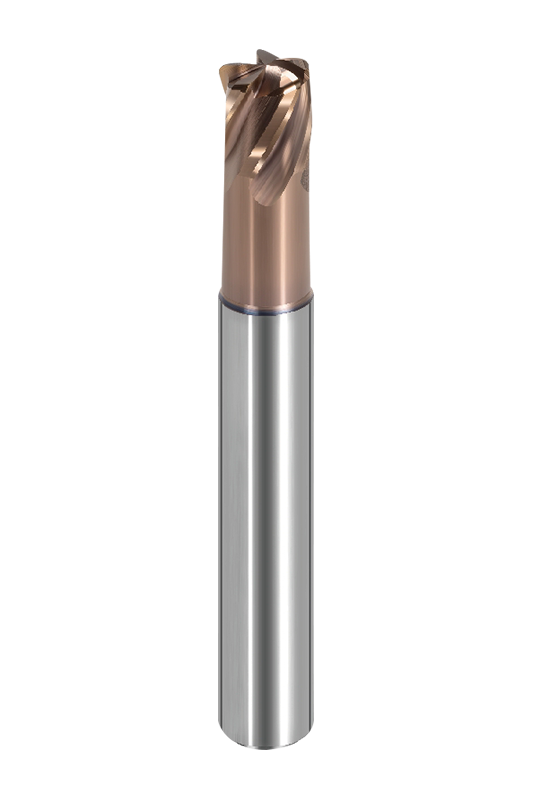 5 Flute High Speed Efficient Rough Milling Cutters Manufacturers, Company - ChanMaton Tools is China 5 Flute High Speed Efficient Rough Milling Cutters Manufacturers and Company, Custom 5 Flute High Speed Efficient Ro...View Product →
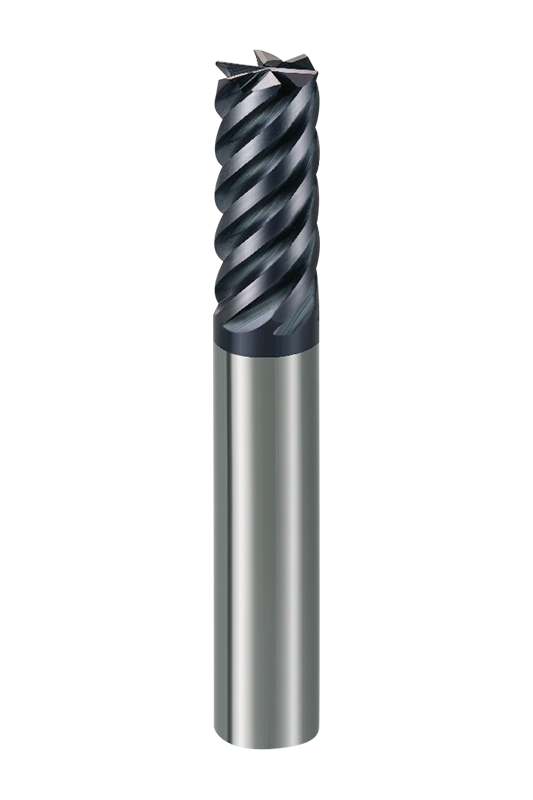 High-Precision 6 Flute Flat End Mills Manufacturers, Company - Changzhou Maton TMaton Tools is China High-Precision 6 Flute Flat End Mills Manufacturers and Company, Custom High-Precision 6 Flute Flat End Mills, • T...View Product →
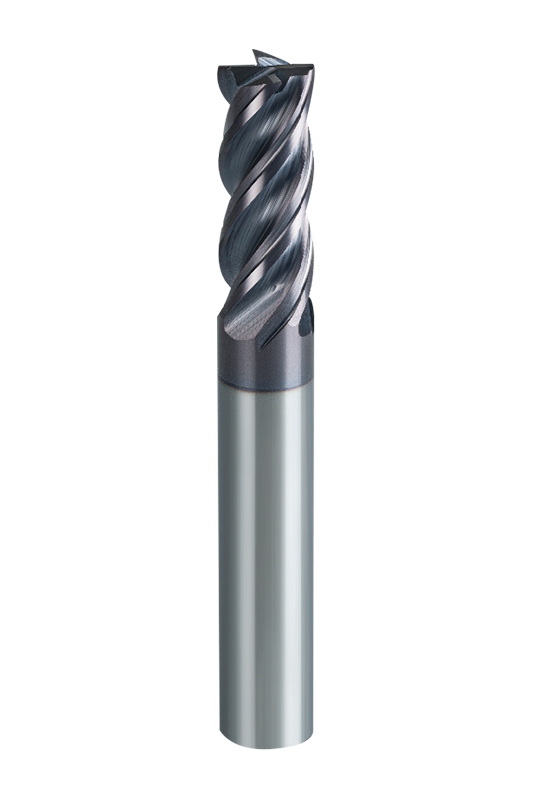 4 Flute Unequal Tooth Pitch End Mill for Stainless Steel Machining Suppliers, FaMaton Tools is China 4 Flute Unequal Tooth Pitch End Mill for Stainless Steel Machining Suppliers and Factory, Custom 4 Flute Unequal Too...View Product →
The product line at Changzhou Maton Tools is designed around this logic. Each tool series pairs a specific substrate grade with a coating and edge preparation that match its target material. If you are comparing options, this guide to end mill types, materials, and coatings explains how different PVD coating types behave on common workpiece materials. The general principle remains: choose PVD for solid carbide end mills, drills, and reamers unless the application demands extremely high interrupted cutting, and choose CVD for indexable inserts that can tolerate a slightly rounded edge in exchange for maximum wear resistance.
CVD and PVD coating are not competing technologies in the sense that one is universally superior. They answer different questions. PVD answers the question of how to keep a sharp-edged tool hard and lubricious without softening its substrate. CVD answers the question of how to make a thick, strongly bonded wear layer for tools that run hot and take heavy shocks. When you match the process to the tool geometry and the workpiece, the payoff appears as lower cost per edge, fewer tool changes, and more predictable machining. The color of the coating will not tell you that story; the process behind it will.

We are End Mills Manufacturer and End Mill Bits Factory. Our Footprints Are Around The World, We provide quality products and services to customers from all over the world.


No.233-3 Yangchenghu Road, Xixiashu Industrial Park, Xinbei District, Changzhou City, Jiangsu Province


+86-18068566610


sales@magotan-tools.com
+86-18068566610
