


 English
 한국어
한국어
 русский

Address:
No.233-3 Yangchenghu Road, Xixiashu Industrial Park, Xinbei District, Changzhou City, Jiangsu Province


Content
When a size 3 center drill comes up in the tool crib, the numbers on the label can be confusing. The dimensions that matter most are the body diameter, the pilot drill diameter, and the overall length. Knowing these three values tells you whether the tool will fit your workholding, reach the part surface, and produce a correctly sized pilot hole for a live center or tailstock. A size 3 center drill has a 0.250-inch (6.35 mm) body diameter, a 0.1093-inch (2.78 mm) pilot diameter, and a 2.0-inch (50.8 mm) overall length. That is the starting point, but choosing the right size requires more than reading one row in a chart.
Every center drill, whether standard or bell type, is identified by three primary dimensions that directly affect your drilling operation.
A related dimension, overall length, matters for tool inventory and machine clearance. A center drill might have the right pilot size but be too long or too short for your tailstock or chuck positioning.
The size 3 center drill is one of the most commonly used sizes in general machining. Standard charts supplied by tooling manufacturers list the dimensions in both inch and metric units. Below is the typical data for a standard type (plain) size 3 center drill.
| Dimension | Inches | Metric |
|---|---|---|
| Body Diameter | 0.250 in | 6.35 mm |
| Pilot Drill Diameter | 0.1093 in | 2.78 mm |
| Pilot Drill Length | 0.1093 in | 2.78 mm |
| Overall Length | 2.000 in | 50.80 mm |
For context, a size 2 has a 0.1875-inch (4.76 mm) body diameter and a 0.0781-inch (1.98 mm) pilot. A size 4 has a 0.3125-inch (7.94 mm) body and a 0.125-inch (3.18 mm) pilot. The progression means pilot diameter and body diameter scale together. Notice that for sizes 2 through 5, the pilot length equals the pilot diameter in standard charts.
If your drawing calls for a size 3 center drill, verify whether it specifies standard or bell type. The bell type adds a 120-degree secondary countersink after the 60-degree primary countersink, which changes the usable depth and the overall appearance of the center hole.
A standard center drill cuts a single 60-degree countersink. The pilot hole provides the location for a lathe tailstock center, and the 60-degree countersink matches the center point angle. This is the default for most machining operations that use a 60-degree live center.
A bell-type center drill has a 60-degree countersink followed by a 120-degree bell opening. The bell opening protects the 60-degree contact surface from damage and helps accommodate chips during drilling. Bell-type tools are common when the workpiece needs multiple operations or when a polished 60-degree surface is required.
The dimensions for both types are listed under the same size number in the chart, and the pilot diameter and overall length remain the same. The difference appears in the countersink geometry. When reading a chart, confirm the type to avoid machining a center hole that does not match your center's contact angle.
Machinists use a simple rule of thumb: the pilot drill diameter should be approximately one-third to one-half of the workpiece diameter. For a 0.750-inch shaft, a size 3 center drill with a 0.1093-inch pilot is too small. A size 5 with a 0.1875-inch pilot would be closer to the right range.
The body diameter also must clear the part. If the center diameter is recessed inside a bore or near a shoulder, a body that is too large will interfere before the pilot reaches full depth. In that case, a smaller body with a proportionally sized pilot may work better than forcing a larger tool.
Material type changes the decision. Stainless steel and titanium produce higher cutting forces and work hardening. Carbide center drills are an option for high-volume production or difficult materials. They provide better edge retention, but they cost more and are more susceptible to chipping if the setup lacks rigidity.
For general-purpose work on steel, aluminum, or cast iron, high-speed steel center drills remain the practical choice. They are tough, forgiving, and inexpensive.
Some shops use a spot drill instead of a center drill when a workpiece will not require a lathe center. A spot drill has a short body and a large point angle, typically 90 or 120 degrees. It creates a chamfered entrance for a standard drill but does not produce the pilot hole needed for a tailstock center. Referencing a pilot hole drilling guide can clarify when each tool is appropriate.
The choice between center drill and spot drill depends on your process. If the part will rotate in a lathe and support between centers, use a center drill. If you only need to guide a twist drill in a milling machine, a spot drill can work, but it does not provide the same self-centering action.
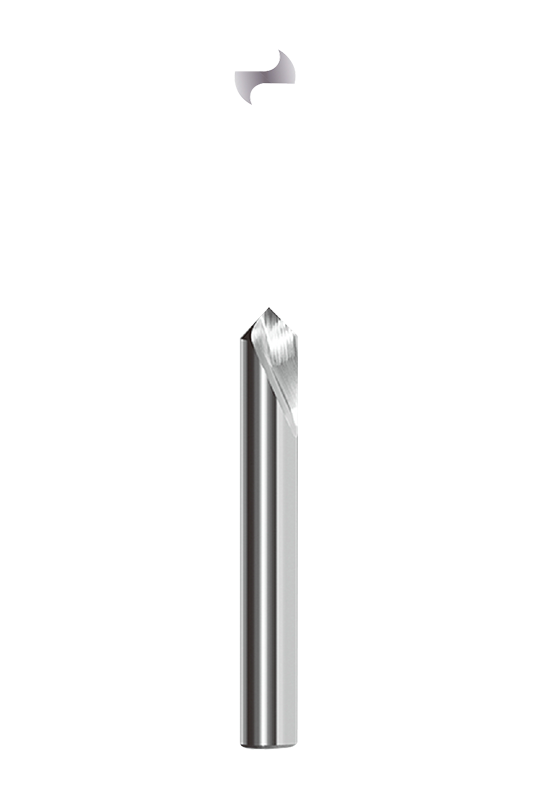 Carbide Spot Drill for Cast Iron and Aluminum Alloy MachiningThis spot drill provides stable center positioning on inclined surfaces, reducing cutting resistance and wear. Its external cooling design improves chip evacuation and machining efficiency, making it suitable for CNC machines machining cast iron and aluminum alloys.View Product →
When you do use a center drill, the hole depth matters. The pilot should be drilled deep enough that the full pilot diameter is engaged, but not so deep that the countersink breaks before the pilot reaches the bottom. Staying within the pilot length, about 0.1093 inch for a size 3, prevents the countersink from rubbing and wearing prematurely.
Before adding a size 3 center drill to your inventory, verify the actual dimensions on the tool itself or its label. Some imported tools use metric labels but are manufactured to inch standards, or vice versa. Confirm the point angle matches your lathe center. The standard is 60 degrees, but some tools are made with 90-degree countersinks for specific applications. A 60-degree center drill paired with a 60-degree lathe center gives consistent seating. If the angle mismatches, the center contacts only at the outer edge, creating a false seat and potential chatter. The same logic applies when you choose spot drills; our guide on drill point angle selection explains when each angle is appropriate.
Look at the finish on the countersink surface. Precision center drills are ground after hardening, which produces a better surface quality and reduces the risk of chips sticking to the cutting edge. Rough-ground or inferior tools leave a coarse finish that can impair the seating of a live center.
Precision Tungsten Steel Center Drill for Accurate PositioningThis tungsten steel center drill offers high hardness and wear resistance, ideal for hard materials. Its ground finish ensures a smooth countersink surface, preventing chip adhesion and improving seating accuracy for live centers.View Product →The recommended speed for a center drill is lower than for a twist drill of the same pilot diameter. Because the pilot is short and the countersink cuts with a wide edge, excessive speed can burn the tool. A typical starting point is 600 to 1,000 RPM for a size 3 in mild steel. For aluminum, speed can be increased, but for stainless steel, reduce it and use cutting fluid.
Feed rate should be gentle and constant. Pecking is recommended for deeper pilot holes to clear chips and prevent the pilot from packing. The most common failure mode is a broken pilot, which happens when the thin web cannot handle high feed or interrupted cuts.
For tolerance control, center drilling is generally not a finish operation. The subsequent drill bit will enlarge the pilot hole. If the pilot is off-center due to a dull tool or a loose collet, the follow-on drill will also wander. Checking runout on the tool holder is essential; TIR should be kept to 0.0005 inch (0.013 mm) or less.
A size 3 center drill has a 0.250-inch body, a 0.1093-inch pilot diameter and length, and an overall length of 2.0 inches. The pilot diameter, body diameter, and pilot length are the three dimensions that govern selection. Match the pilot to your shaft diameter, verify the countersink angle for your live center, and keep speeds and feeds conservative to avoid a broken pilot.
When you start a center drilling operation, check the tool type, confirm the dimensions against a reliable chart, and ensure you have the right tool for the material. For production use, tungsten steel center drills from an experienced manufacturer can provide the precision needed for repeatable center hole machining.

We are End Mills Manufacturer and End Mill Bits Factory. Our Footprints Are Around The World, We provide quality products and services to customers from all over the world.


No.233-3 Yangchenghu Road, Xixiashu Industrial Park, Xinbei District, Changzhou City, Jiangsu Province


+86-18068566610


sales@magotan-tools.com
+86-18068566610
